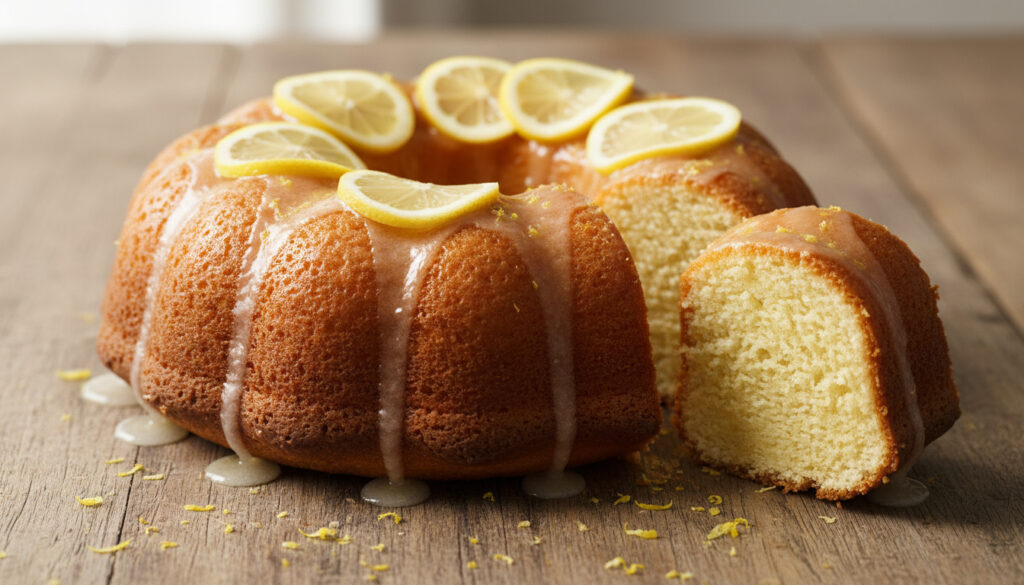
Gâteau au Citron – Recette Simple et Moelleuse
Intro
The gateau au citron occupies a singular place in French domestic baking. More sophisticated than a simple pound cake yet less formal than an entremets, this citrus-scented loaf captures the bright essence of Mediterranean winters. In Marseille, where Italian and North African influences temper classic French technique, the cake appears in windows from the Vieux-Port to La Castellane, often showcased in artisanal bakeries along boulevard Longchamp, drizzled with a translucent lemon glaze that cracks slightly under the knife.
Grid
Distinctive characteristics define authentic preparations. The crumb should remain moist but never dense, achieved through careful emulsification of butter and sugar before incorporating citrus oils. Unlike Anglo-Saxon versions that lean toward heavy sweetness, the French ideal balances acid against fat, creating a palate-cleansing finish rather than a cloying residue. Traditional recipes specify unwaxed organic fruit, preferably from the Menton harvest, where the microclimate yields thinner skins and more aromatic essential oils [1].
Insights
The cake’s ubiquity belies its relatively recent canonization. While citrus cultivation along the Côte d’Azur dates to the Middle Ages, the incorporation of lemon zest into butter-based cakes became widespread only in the nineteenth century, following improvements in citrus storage and the popularization of chemical leavening agents [2]. Today, the dessert functions as a cultural bridge in Marseille’s diverse culinary landscape, appearing alike in bourgeois salons and working-class bistros, sometimes perfumed with orange flower water or served alongside other traditional Provençal desserts.
Regional distinctions persist despite standardization pressures. Mentonnais purists insist on incorporating the entire lemon—flesh, zest, and judiciously measured pith—while Corsican variants often substitute brocciu cheese for butter, creating a lighter, more aerated structure that diverges significantly from the continental norm.
Table
| Region | Key Ingredient Variation | Texture Profile | Accompanying Beverage |
|---|---|---|---|
| Provence (Classic) | Butter, Menton lemon zest | Dense, moist crumb | Pastis or Earl Grey |
| Corsica | Brocciu cheese, eau de vie | Airy, soufflé-like | Cap Corse Muscat |
| Parisian Bistrot | Sunflower oil (modern) | Uniform, pound-cake density | Café crème |
Details
Technical execution hinges on temperature control. Butter must soften to precisely 18–20°C to achieve proper aeration during the creaming phase; too cold and the mixture remains granular, too warm and the emulsion collapses. Eggs should incorporate one at a time, waiting until each yolk fully integrates before adding the next. The addition of acidic lemon juice to the alkaline baking powder creates an immediate chemical reaction, meaning batters must transfer to the oven quickly to preserve leavening power [3].
Glazing presents another decision point. The classic glaçage au citron requires sifted icing sugar and freshly squeezed juice whisked to a nappé consistency, applied while the cake remains warm enough to absorb the upper layer yet cool enough to prevent sliding. Some Marseille pâtissiers instead favor a syrup brushed across the surface, allowing the liquid to penetrate deeply and create a nearly pudding-like outer stratum.
Timeline
The evolution of citrus-based cakes in France follows the expanding availability of fresh lemons. Until the seventeenth century, preserved preparations dominated, as fresh fruit remained prohibitively expensive for most households. The opening of railway lines connecting Menton to Paris in the mid-1800s facilitated the transport of fragile citrus northward, coinciding with the publication of early recipes in La Cuisinière Bourgeoise [4].
Post-war domestic science emphasized convenience, leading to versions utilizing vegetable oil rather than butter. The late twentieth century saw a return to artisanal methods, with contemporary chefs reinterpreting the form through the lens of gâteau de voyage—travel cakes designed for portability and shelf stability.
Clarity
Common misconceptions obscure the cake’s true nature. It is not, despite appearances, merely a lemon-flavored quatre-quarts; the acid content fundamentally alters protein structure, requiring adjusted ratios to prevent toughness. Furthermore, the term “gateau au citron” carries no protected designation, resulting in commercial preparations that rely on artificial extracts rather than citrus zest.
Quality markers remain consistent: the crumb should display fine, even alveoli without tunneling, and the crust must exhibit a slight chewiness contrasting the tender interior. Aromatically, the scent should suggest fresh peel rather than candy-like intensity.
Analysis
Marseille’s specific interpretation reflects the city’s port history. The incorporation of orange flower water—rare in Parisian versions—speaks to North African and Levantine influences, adding a floral top note that complements lemon’s acidity. Local bakeries often utilize farine de blé dur (durum wheat flour), common in Mediterranean baking but unusual in northern French pâtisserie, yielding a slightly golden hue and resilient texture [5].
Economic factors influence ingredient choices as well. While Menton lemons command premium prices, many Marseille bakers source from less expensive Corsican or Spanish suppliers, adjusting sugar levels to compensate for varying acid concentrations. This practical adaptation has created a distinct regional style: less sweet than Anglo-Saxon equivalents, more aromatic than industrial French versions, and typically baked in elongated loaf molds rather than bundt configurations.
Quotes
“The true test comes on the second day. A proper gateau au citron remains moist without becoming sodden—the lemon preserves, but the butter must not oxidize.”
— Chef Amandine Lefranc, Pâtisserie Moderne, Marseille
“We underestimate the violence of citric acid on gluten. Treat it like wine: it needs to breathe, to rest, before you can taste its true character.”
— Jean-Pierre Cartier, Culinary Historian, Aix-en-Provence
Summary
The gateau au citron stands as both comfort food and technical benchmark within French baking tradition. Its preparation demands attention to ingredient quality—particularly citrus provenance—and precise execution of emulsion techniques [6]. Whether served as an afternoon snack with coffee or dressed with berries for dessert, the cake encapsulates the Provençal affinity for balancing richness with bright, acidic clarity. For home bakers and professionals alike, mastering this seemingly simple cake offers a foundation for understanding broader principles of fat-acid interactions in pastry.
FAQ
Why does my lemon cake sink in the middle?
Center collapse typically indicates either under-baking or excessive acid disrupting the protein structure. Ensure your oven reaches true 170°C before inserting the batter, and verify that baking powder remains within its expiration date. Opening the oven door during the first twenty minutes of baking can also cause temperature shock and structural failure.
Can I substitute lime or orange for lemon?
While possible, these substitutions alter the chemical balance significantly. Limes possess higher acidity and different essential oil compositions, often resulting in a drier crumb. Oranges contain less acid and more sugar, requiring reduced sweetening in the batter. For authentic results, use true lemons, preferably unwaxed organic varieties.
How long does gateau au citron stay fresh?
Properly stored in an airtight container at cool room temperature, the cake maintains optimal texture for three days. The high acid content acts as a natural preservative, though butter-based versions will eventually oxidize. Glazed cakes actually improve after twenty-four hours as the moisture redistributes, but avoid refrigeration, which accelerates staling.
What distinguishes French lemon cake from British or American versions?
French preparations typically utilize less sugar and rely exclusively on butter rather than vegetable oil. The crumb structure aims for a tighter, finer grain suitable for slicing thinly, rather than the fluffy, muffin-like texture preferred in Anglo-Saxon baking. Additionally, French recipes rarely incorporate cream cheese frostings or thick buttercreams, favoring simple glazes or powdered sugar dusting.
Plus d articles lies
 Feu d’artifice autour de moi : dates et lieux 2025
 Birkenstock Arizona Femme : Guide d’Achat Complet (2025)
 Damian Penaud : maladie, salaire, enfants, carrière
 Golden Goose : prix, célébrités, signification et guide d’achat
 Ensemble Nike Tech – Prix Tailles Avis et Où Acheter
 Où regarder Liverpool – PSG : chaîne, streaming, abonnement
 Où trouver le meilleur asado negro près de chez vous à Dublin
